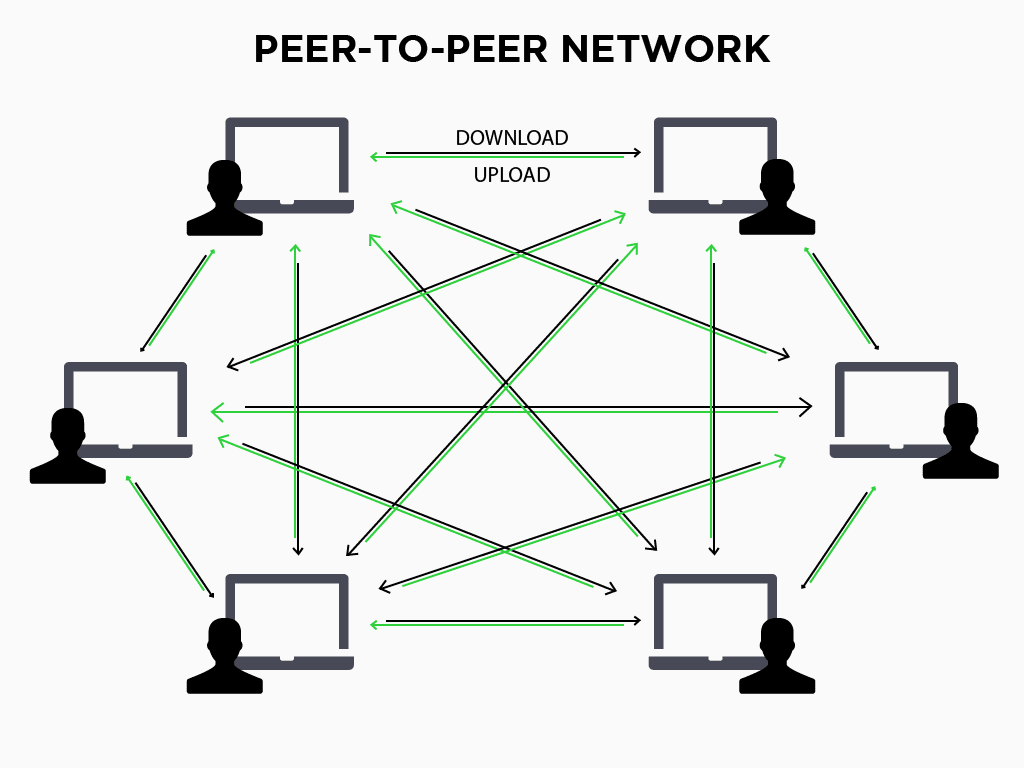

Understanding the CAP and PACELC Theorem in the Context of Blockchain
Exploring Trade-offs in Blockchain Design Through Distributed System Theorems

I'm a Senior Software Engineer with a keen interest in IoT, AI, Blockchain, and Data Communication Networks. I work on projects that integrate these technologies to create innovative solutions.
Introduction
Blockchain technology has changed how we think about data storage, transactions, and decentralized systems. To fully understand blockchain, it's important to know some basic principles from distributed systems, like the CAP theorem and PACELC theorem. These concepts help explain the trade-offs in blockchain design and implementation.
The CAP Theorem
The CAP theorem, introduced by Eric Brewer in 1998, states that it is impossible for a distributed data store to simultaneously provide more than two out of the following three guarantees:
Consistency (C): Every read receives the most recent write or an error.
Availability (A): Every request receives a (non-error) response, without the guarantee that it contains the most recent write.
Partition Tolerance (P): The system continues to operate despite an arbitrary number of messages being dropped (or delayed) by the network between nodes.
In the context of blockchain:
Consistency: Ensuring that all nodes in the network reflect the same state of the ledger.
Availability: Guaranteeing that the blockchain is accessible and operational, allowing transactions to be processed.
Partition Tolerance: The blockchain's ability to continue functioning even if there are network splits or delays.
Blockchains, being decentralized, must handle network partitions, which means they have to balance between consistency and availability. Bitcoin, for example, prioritizes availability and partition tolerance over immediate consistency. This means Bitcoin is always available for transactions, but consistency is achieved over time as the blockchain eventually reaches a consistent state across all nodes. This is known as eventual consistency, where consistency is achieved through validation from multiple nodes over time.
The PACELC Theorem
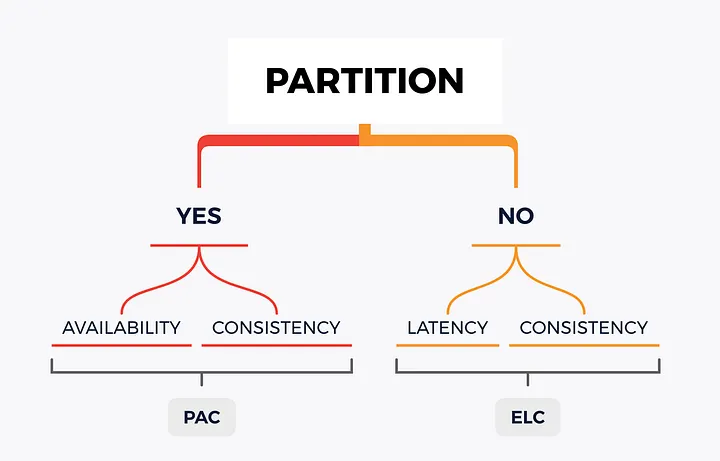
The PACELC theorem, proposed by Daniel J. Abadi, extends the CAP theorem by introducing another dimension to consider during normal operation. It states:
If there is a Partition (P), then the system must trade off between Availability (A) and Consistency (C).
Else (E), when the system is running normally, it must trade off between Latency (L) and Consistency (C).
In the context of blockchain:
Partition (P): As previously discussed, blockchains must handle network partitions.
Availability (A): The blockchain's ability to continue processing transactions.
Consistency (C): Maintaining a uniform state across all nodes.
Else (E): Under normal conditions without partitions.
Latency (L): The time it takes to process and confirm transactions.
Conclusion
The CAP and PACELC theorems offer a theoretical framework to understand the trade-offs in distributed systems like blockchain. By examining how platforms like Bitcoin and Ethereum handle these trade-offs, we gain a better understanding of their design choices and operational behaviors. These principles are crucial for developing robust, efficient, and secure blockchain applications. As blockchain technology advances, new strategies and innovations will continue to emerge, addressing these trade-offs in new ways and expanding the capabilities of distributed systems.